Controlled processing and transfer
Define CO₂ processing and pulse-transfer conditions around your study so you can investigate how the process affects your formulation.

The ME-2.5 gives formulation teams a configurable platform to develop and compare active–carrier processing methods using controlled CO₂ transfer.
For pharmaceutical teams, evaluate poorly soluble API-carrier questions through controlled, formulation-specific studies.
Request a 15-minute technical discussion with our team.
Designed for research. Application outcomes are formulation-specific and must be evaluated.

The ME-2.5 Molecular Encapsulator combines a 2.5 L processing vessel, controlled CO₂ antisolvent pulse transfer through a static-mixer path, and a separate 10 L collection vessel.
Develop and compare formulation methods, investigate processing variables, and collect evidence that helps your team select its next experiment.
Define CO₂ processing and pulse-transfer conditions around your study so you can investigate how the process affects your formulation.
Follow a defined path from the 2.5 L vessel through the static mixer to the 10 L collector, then characterize the recovered material.
Discuss conventional stirring and compatible cosolvents to support preparation and active–carrier contact. Confirm each option in your configuration.
Build application knowledge across repeated projects and compare CO₂ processing with relevant methods using matched study conditions.
Investigate poorly soluble active–carrier systems and compare formulation behavior using appropriate analytical methods.
Explore active–carrier combinations and generate application-specific evidence for formulation decisions.
Study incorporation into water-based products, dispersion, active loading, and recovery for a defined ingredient formulation.
Support funded studies in formulation and high-pressure processing where multiple projects justify a shared platform.
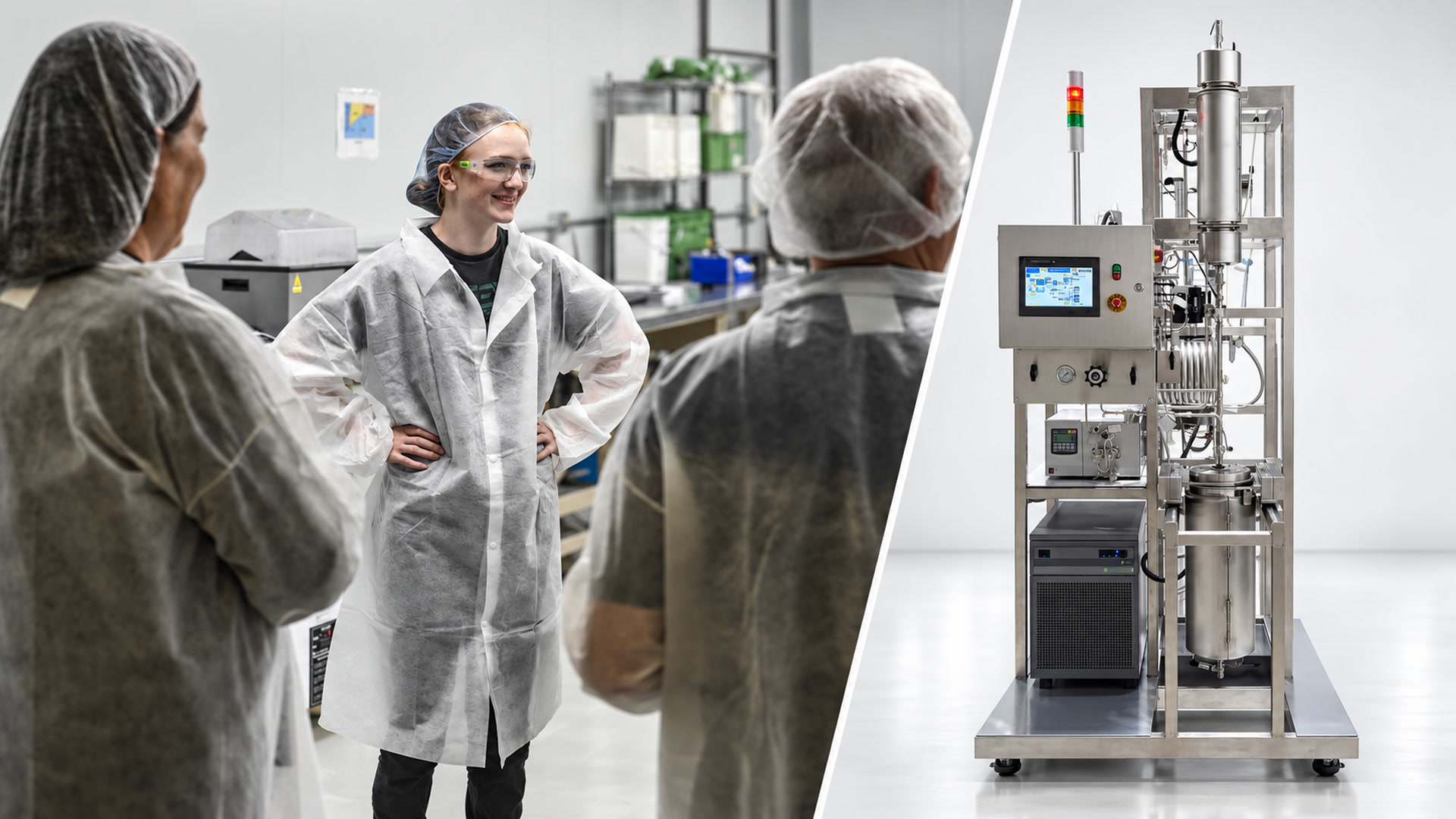
Application fit and performance depend on the formulation, configuration, and study conditions. Discuss your active, carrier, and target outcome with our team.
From designing an experiment to planning a shared laboratory, each team member brings a different question to the ME-2.5 evaluation.
Investigate poorly soluble API-carrier systems through controlled comparisons. Define the question around dissolution, precipitation, loading, or stability, then characterize the recovered material against relevant controls.
Your focus: Interpretable evidence, appropriate analytical methods, and results your colleagues can reproduce.
Evaluate whether a reusable CO₂ research capability fits your client-program pipeline. Compare ownership with existing equipment and outsourced development, considering project demand, staffing, analytical support, and complete installed cost.
Your focus: Useful capability across multiple programs, realistic utilization, and a defensible capital decision.
Explore carrier and process combinations for a defined ingredient application. Assess incorporation into water-based products, active loading, recovery, and handling to develop meaningful samples and reusable application knowledge.
Your focus: Application evidence that supports credible customer discussions and formulation decisions.
Build a research program around controlled CO₂ processing, formulation variables, and repeat studies. Evaluate shared use across investigators and researcher training alongside instrument access, service, and an ongoing operating plan.
Your focus: Reproducible studies, researcher development, and a sustainable shared-laboratory capability.
Scope the practical requirements before installation. Review configuration, utilities, site responsibilities, cleaning and containment, operating limits, acceptance criteria, documentation, training, spares, and support with the technical team.
Your focus: Clear implementation responsibilities, maintainability, and an equipment proposal that matches your site.
Bring your scientific, budget, and operations stakeholders into the same discussion. Formulation outcomes must be established experimentally; configuration and support scope should be confirmed for your project.
Request a technical discussionThe supplied base configuration combines a 2.5 L processing vessel, controlled CO₂ antisolvent pulse transfer, a static-mixer transfer path, and a separate 10 L collector.
Define the active, carrier, and preparation method for the question being studied.
Use controlled processing conditions as experimental variables in the study plan.
Move the processed material through the static-mixer transfer path in a controlled pulse.
Recover the material and use fit-for-purpose analytical methods to assess the result.
Schematic of the described base configuration; final operating conditions and supplied-equipment specification should be confirmed for each proposal.
Some preparation and feed approaches are selectable options or proposed research configurations. They need a technical review before they are represented as included equipment.
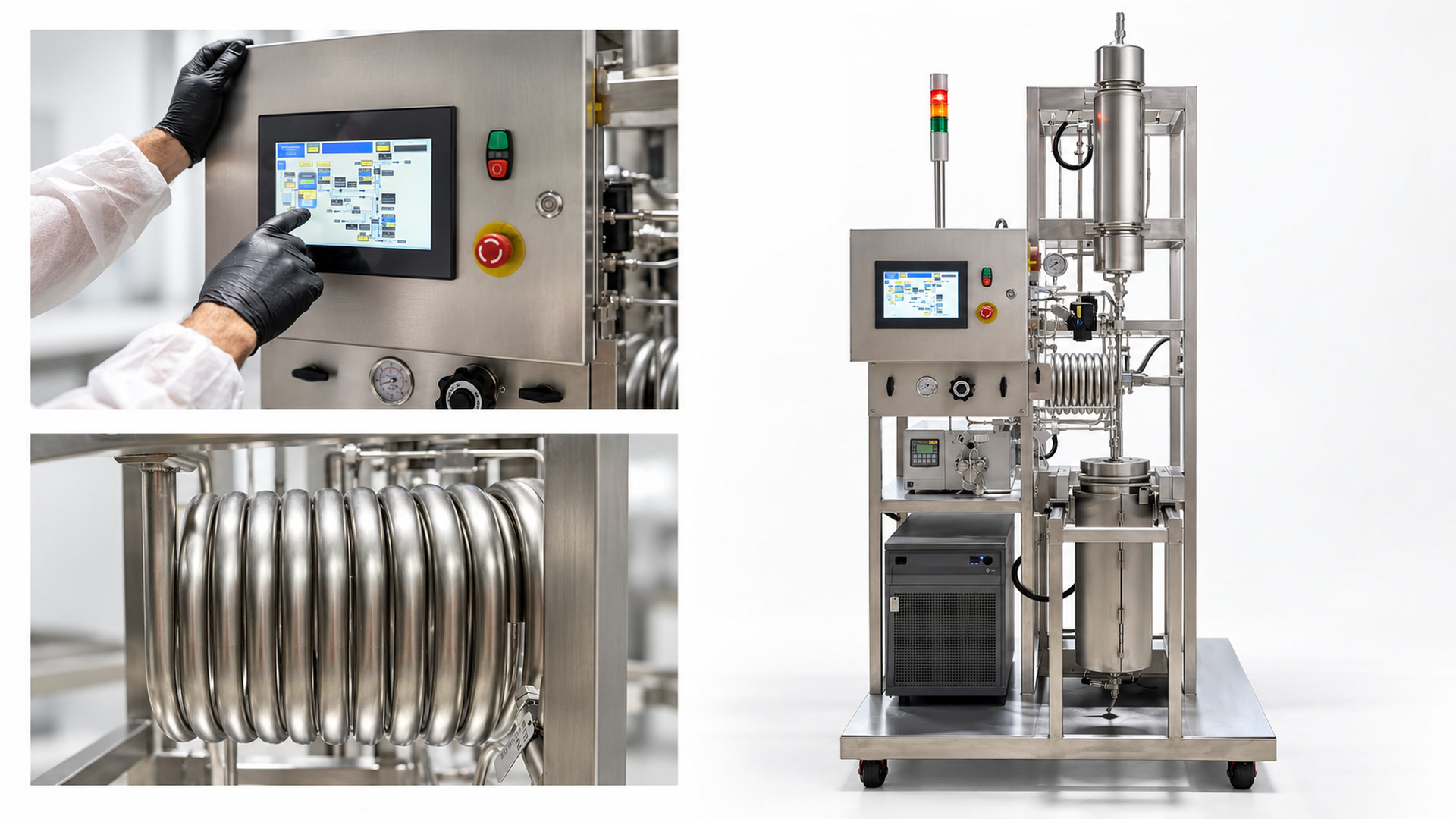
2.5 L processing vessel, controlled CO₂ antisolvent pulse transfer through a static-mixer path, and separate 10 L collection vessel.
Conventional stirring and compatible cosolvents can be discussed as options. Their value depends on the active, carrier, preparation, and target experiment.
External preparation or multi-feed arrangements may be considered for research. Availability, design, and scope must be confirmed for the intended configuration.
Pressure, temperature, CO₂ delivery, feed preparation, transfer, and recovery conditions should be defined with the study and verified against the approved equipment specification.
A configuration conversation should identify the base unit, options, site requirements, training, service, acceptance documentation, and application-development scope before a purchase decision.
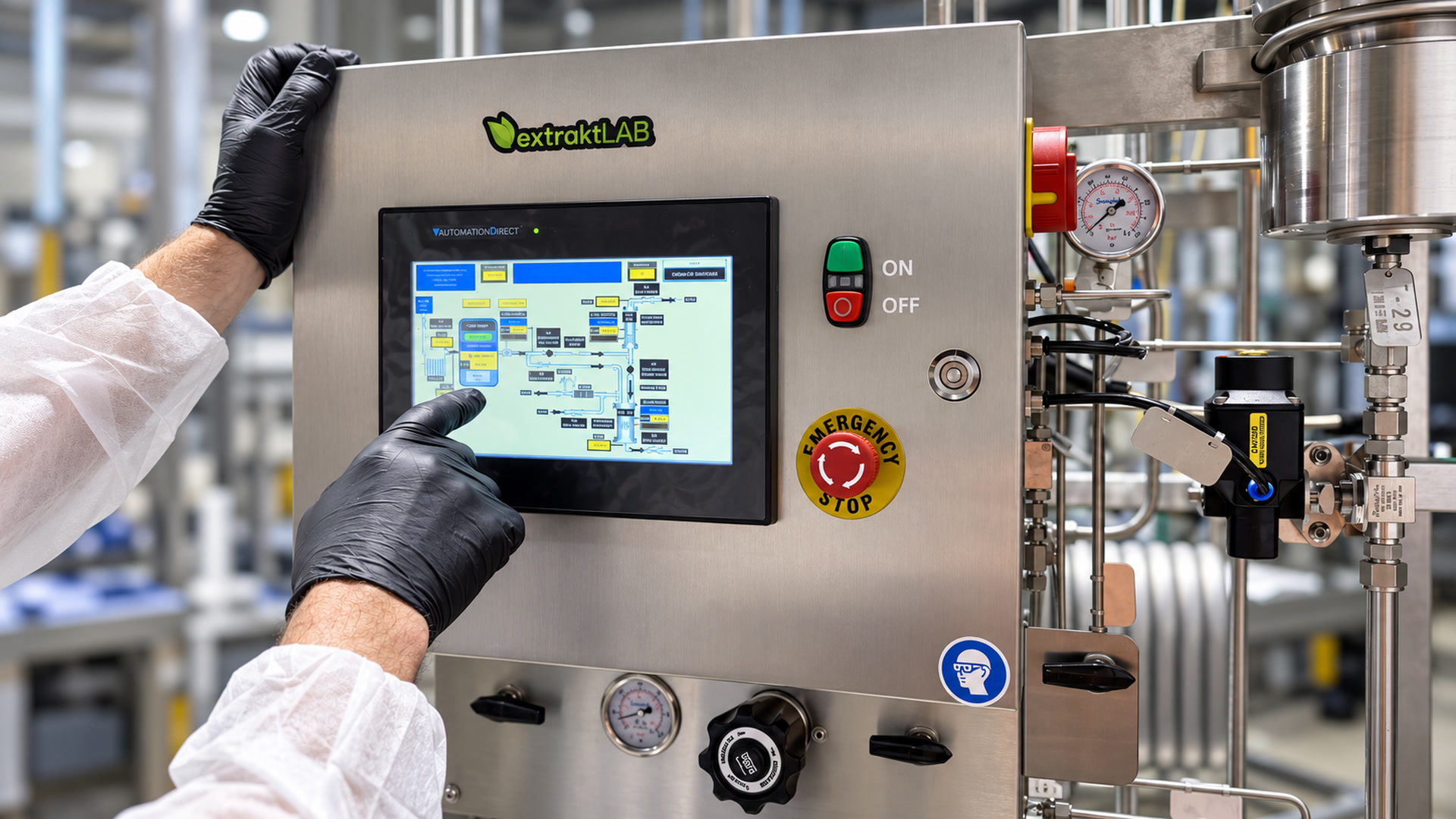
A useful evaluation connects an active–carrier question to a study plan, analytical method, operating envelope, and installation scope. Bring your technical and operations stakeholders into the conversation early.
Request a technical discussionME-2.5 is most relevant when your team has recurring research needs, access to analytical methods, and a practical plan to operate the system.
You have a named active–carrier or formulation question to investigate.
You can access appropriate samples and fit-for-purpose analytical support.
There is a recurring project pipeline or shared-use case for the capability.
A trained operator, site review, and internal project sponsor are available.
If the application is uncertain or the demand is occasional, begin by defining a feasibility study or another evaluation path before assuming equipment ownership is the best fit.
Explore the formulation questions a study can address and the details to discuss before configuring your platform.
The platform supports studies comparing active–carrier processing methods. Measure solubility and dissolution in the intended medium under defined test conditions, and compare the processed formulation with relevant controls. Improvement must be demonstrated for your formulation.
Evaluate the recovered material after preparation, dilution, and exposure to its target environment. A study can compare dispersion and precipitation behavior across processing conditions; the outcome depends on the formulation.
Use an appropriate assay and a material balance to measure loading and active retention. Compare recovered material across repeat runs to assess consistency.
Establish physical and chemical stability with a defined storage and handling protocol. Processing results alone do not establish stability or shelf life.
Define the process settings, sampling plan, recovery procedure, and repeat runs before the study. Compare analytical results and material recovery to assess repeatability.
No. Those are application outcomes to establish through formulation-specific testing. The platform supports research and comparison; it does not establish that every formulation improves or that CO₂ always outperforms another method.
The supplied description identifies a 2.5 L processing vessel, controlled CO₂ antisolvent pulse transfer, a static-mixer transfer path, and a separate 10 L collection vessel. Confirm the approved equipment specification and proposal for final inclusions.
Conventional stirring and compatible cosolvents are described as options. External preparation and multi-feed arrangements are proposed research configurations. Ask the team to confirm availability, engineering scope, and what is included for your project.
Bring the active and carrier, the formulation problem, current method and evidence, target analytical endpoints, sample constraints, expected project frequency, site and utility questions, and the people who will operate or approve the equipment.
Share your formulation question, study goals, or configuration details. Submit the form to request a 15-minute technical discussion. Our team will be in touch to coordinate a time.
Prefer to call? 612-790-3846.